TECHNOLOGY FRAMEWORK Innovation
We rely on technological innovation to deliver efficient, cost-effective climate solutions that meet multiple needs and provide a diverse set of benefits. Longer-term solutions to climate change, as well as the achievement of sustainable development and net-zero emissions goals, require innovation to enable the scale-up of technologies to meet global demands. The CTCN supports all facets of technology innovation through technical assistance, capacity building and knowledge sharing. This year, the CTCN supported several events and initiatives targeting innovation across sectors and stakeholder groups.
The CTCN’s Youth Climate Innovation Labs and Academy offered youth-centered workshops to co-create endogenous climate technology solutions by using tools such as design thinking principles. Following the completion of the two Labs in Africa and Asia, selected groups participated in a Youth Innovation Academy, a two-month intensive incubator designed to help idea-stage start-ups transform ideas into viable projects. Eleven of the newly developed and promising start-ups pitched their technology solutions for enhanced climate action to investors, partners, and experts in the industry. A third lab was launched in Latin America in July 2021, with the Academy scheduled to take place in the fall. In total, the CTCN received over 1,300 applications from young innovators from across 74 countries. 97 mentors guided participants throughout the lab and academy. With over 4,3 million impressions on social media, the CTCN estimates that over 33 million people were engaged on the topic of youth and technology innovation in online media.
The CTCN launched the Adaptation Fund’s 5 million USD Climate Innovation Accelerator (AFCIA) in November 2020. The Centre, which was selected to manage the AFCIA programme, received over 200 requests from more than 60 countries in response to its first two calls for proposals. The CTCN is now providing technical assistance to test, evaluate, roll out and scale up innovative adaptation practices, products, and technologies. Key sectors include agriculture, food security, water management, rural development, disaster risk reduction and human health.
The CTCN also organized three regional webinars to share early lessons learned following the first call for applications for the AFCIA programme. Findings point to challenges faced by countries in articulating their adaptation technology needs, particularly for LDCs and SIDS, and the need for additional initiatives to improve their capacities to identify and assess innovative adaptation practices, products, and technologies.
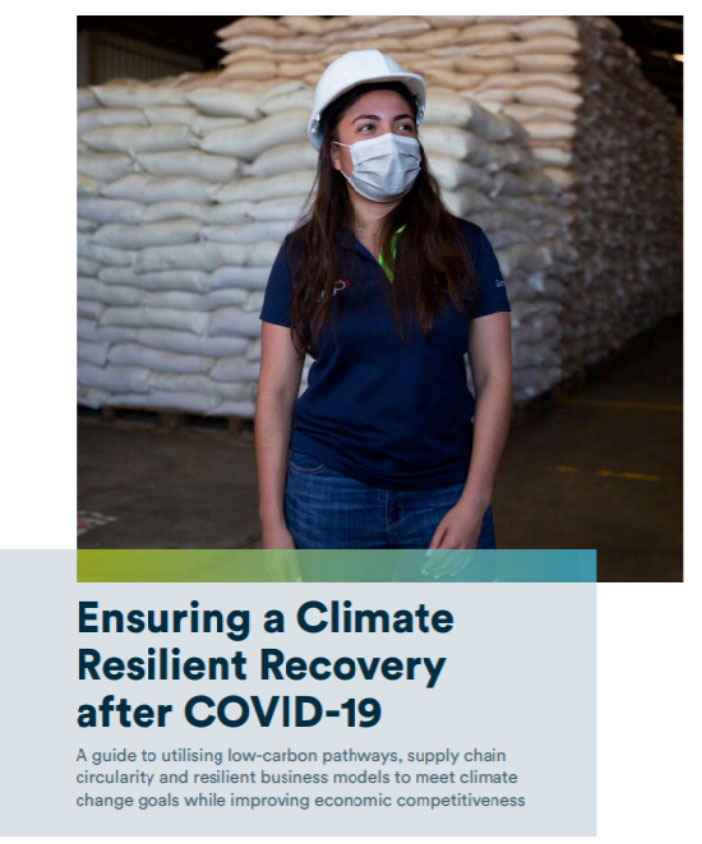
A new guidebook highlights a path to resiliency following the COVID-19 pandemic
In support of COVID-19 recovery efforts, the CTCN developed a practical guidebook to inform the development of national roadmaps and highlight best practice cases for developing countries to quickly get back on their feet and build back economies with sustainability in greater focus. The rise in technical assistance requests received by the CTCN to promote circular economy approaches highlights an increasing interest from countries to set a new development direction towards resilient recovery with a circular, low-carbon economy.

The CTCN delivers innovative technical assistance
The CTCN consistently provides technical assistance for innovative low carbon technology solutions and support to national ambitions on innovation and technology development and transfer. For example, the CTCN supported Jamaica in identifying a national climate change research agenda that includes collaboration with academia. Other technology solutions supported by the CTCN include unmanned aerial vehicle (UAV) remote sensing technology in Eswatini and solar milling technologies for women-led agri-food SMEs in Senegal.
Ocean thermal energy conversion in Nauru
The Republic of Nauru was an early innovator in ocean thermal energy conversion (OTEC), collaborating with the Tokyo Electric Power Company in 1981 to set up the world’s first OTEC pilot plant there. It was the highest power OTEC plant ever operational, as well as the first and last to feed power to an operating commercial grid. Since then, significant improvements have been made to OTEC technology, while construction techniques have also improved and been climate proofed. The Pacific Island countries are promising locations for ocean technologies due to the costs of oil, limited freshwater sources and the potential of aquaculture. Nauru has been deemed an ideal location due to a rapid drop-off beyond the reef.
In addition, Nauru has almost reached its target of obtaining 50% of grid electricity from renewable sources and is ready to identify renewable sources beyond solar-based solutions, as the country is constrained in installing more solar PV due to its limited land space. Ocean energy therefore presents attractive opportunities as a supplementary energy source.

The CTCN is supporting Nauru with technical resources and facilitating access to funding and expertise in conducting a pre-feasibility study assessing OTEC’s potential compared to other ocean energy solutions. A special focus is being given to OTEC technology since it is expected to be the most cost-effective option for Nauru. The pre-feasibility study is collecting data to identify the most suitable site for different ocean energies (wave, tidal or thermal), and then suggesting the most appropriate technology to provide both electricity and water security to the island. This study is providing critical input to a more detailed feasibility study on implementing pilot projects under the GCF. The CTCN will support the development of a GCF draft concept note based on the most suitable technology identified for the island, which could ideally serve as an example for other countries in the region.

This technology assistance advances:
Nauru’s Nationally Determined Contribution
To replace a substantial portion of electricity generation with large-scale solar PV systems, and to develop alternative renewable energy sources.
Sustainable Development Goals: